The Red-Carpet Barrier Reset: Emergency Calming for Erythema Flares
Whether stepped onto a red-carpet step-and-repeat under blinding 5,000-Kelvin floodlights or preparing for an unavoidable public presentation, acute neurovascular erythema strikes without warning. When a compromised skin barrier suddenly flares into fiery crimson patches, burning sensations, and papular warmth, frantic internet hacks can easily trigger chemical burns or severe rebound dilation. A master aesthetician and botanical cosmetic chemist outlines the physiological 4-hour emergency reset protocol.
Emergency Erythema Protocol: Rapid Triage Summary
- 1. Halt Chemical Agitation Immediately: Cease all chemical exfoliants (AHAs, BHAs, retinoids, ascorbic acid), physical scrubs, alcohol-based toners, and hot water washes. Any additional enzymatic or acid insult intensifies epidermal damage.
- 2. Avoid the Ice Fallacy: Never press ice cubes, ice globes, or frozen gel packs directly against reactive cheeks. Thermal shock triggers paradoxical capillary hyper-dilation (Lewis hunting response) and cellular frost injury. Use cool, isotonic saline compresses instead.
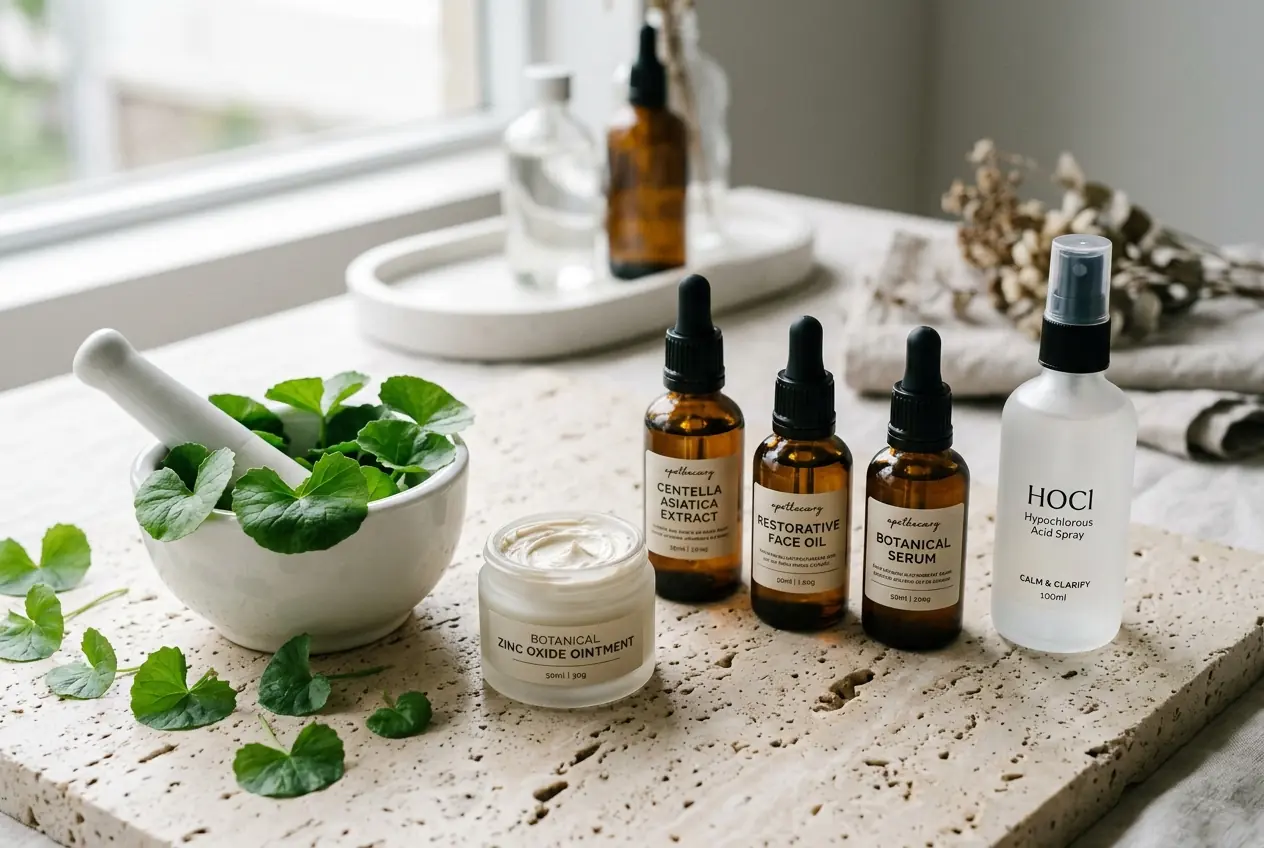
- 3. Deploy Non-Rebound Calming Biologics: Rely on pharmaceutical-grade pure hypochlorous acid (HOCl) to silence cytokine cascades, cold physiological compresses to absorb latent heat, and non-nano zinc oxide pastes to soothe unmyelinated cutaneous nerve fibers without rebound risk.
1. The Biology of the Flare: Neurovascular Vasodilation, TRPV1, and Mast Cell Cascades
Acute facial erythema is rarely a superficial cosmetic problem; it represents a coordinated neurovascular and immunological cascade occurring within the dermal microcirculation. When individuals with sensitive, rosacea-prone, or barrier-compromised skin experience acute stress, ambient temperature shifts, or topical irritation, cutaneous sensory nerves fire rapidly.
Central to this reaction are Transient Receptor Potential Vanilloid 1 (TRPV1) and TRPA1 ion channels located on unmyelinated C-nerve fibers in the upper dermis. When stimulated by frictional stress, hot water, chemical solvents, or endogenous catecholamines, TRPV1 channels open, prompting the localized release of vasoactive neuropeptides, most notably Substance P and Calcitonin Gene-Related Peptide (CGRP).
On studio soundstages and red-carpet arrivals, this cascade is exacerbated by intense tungsten or LED key lights, which emit localized radiant heat. For skin with a compromised stratum corneum, elevated dermal temperature accelerates Transepidermal Water Loss (TEWL) and degrades the lipid bilayer, creating a self-amplifying feedback loop of burning, throbbing, and persistent flushing.
2. The Rebound Trap: Why Topical Vasoconstrictors Can Ruin an Event
In desperation before cameras or public events, performers and patients frequently seek prescription alpha-2 adrenergic receptor agonists—most commonly brimonidine tartrate (0.33% gel) or oxymetazoline hydrochloride (1% cream). These agents function by directly stimulating alpha-adrenergic receptors on vascular smooth muscle, causing profound, immediate constriction of cutaneous arterioles and superficial capillaries.
For the initial 60 to 180 minutes, the skin appears strikingly pale—almost chalk-like. However, pharmacological vasoconstriction is a temporary cosmetic illusion that masks, rather than resolves, the underlying inflammation. As the topical medication begins to dissociate from receptor binding sites and metabolize, reactive hemodynamic forces take over.
Peer-reviewed clinical dermatological trials extensively document the phenomenon of paradoxical rebound erythema following topical brimonidine use (PMC5605221, PMC4108952). When alpha-adrenergic agonism subsides, compensatory reflex vasodilation floods the capillary beds. The resulting erythema, facial burning, and edema are frequently significantly more severe than the baseline condition before drug application.
At our Houston aesthetic atelier, we maintain a strict prohibition against deploying alpha-agonists as emergency pre-event treatments. An untested vasoconstrictor applied two hours before a premiere can transition into an uncontrollable, throbbing purple-red flare exactly when the client steps in front of the lens. Instead, true clinical emergency triage must prioritize physiological heat extraction and cellular anti-inflammatory signaling.
3. The 3-Step Emergency Protocol: Calming Erythema in Under 4 Hours
When faced with an acute pre-event erythema crisis, the intervention must work with cutaneous physics and innate biochemistry. The following three-step protocol safely reduces surface skin temperature, attenuates neurogenic vascular tone, and neutralizes microbial triggers without triggering rebound dilation.
Evaporative Thermal De-escalation (Cool Saline Compress)
Avoid raw ice at all costs. Instead, prepare a bowl of chilled (15°C to 18°C) sterile 0.9% physiological sodium chloride (normal saline) or pure nitrogen-pressurized thermal spring water. Saturate unbleached medical cotton gauze or clean lint-free cloths and lay them across the inflamed facial zones for 8 to 10 minutes.
The Biophysics: Isotonic saline matches the osmotic pressure of extracellular dermal fluids, preventing hypotonic tissue edema while gently drawing heat away from dilated capillaries through controlled ambient evaporation. Remove the cloth before it warms to facial temperature, and avoid aggressive friction.
Pure Hypochlorous Acid (HOCl 0.015%) Saturation Mist
Immediately following the cold compress, saturate the entire face with a fine mist of pharmaceutical-grade hypochlorous acid (HOCl) stabilized between pH 4.5 and 5.5 at a concentration of 150–200 ppm (0.015%–0.020%). Allow the mist to air-dry naturally for 3 to 5 minutes.
The Biochemical Mechanism: Hypochlorous acid is naturally generated by myeloperoxidase inside human white blood cells. As explored in our clinical guide to hypochlorous acid sprays for reactive flushing, topical HOCl exhibits remarkable anti-inflammatory properties, suppressing nuclear factor kappa B (NF-κB) transcription and downregulating interleukin-6 (IL-6) and tumor necrosis factor-alpha (TNF-α) (PMC6303114, PMC12730738). It rapidly clears opportunistic microflora while calming mast-cell activity without stinging or desquamating lipids.
Pharmaceutical Non-Nano Zinc Oxide & Oat Suspension Compress
Apply a delicate, sheer emulsion containing 15% to 20% non-nano pharmaceutical zinc oxide blended with colloidal oatmeal avenanthramides. Do not vigorously rub; press the suspension onto erythematous cheeks, perioral contours, and the nasal bridge with clean fingertips.
The Clinical Action: Zinc oxide exerts potent astringent, anti-inflammatory, and cytoprotective effects on denuded skin, inhibiting dermal matrix metalloproteinases and stabilizing mast cells. Concurrently, colloidal oatmeal avenanthramide therapy (PubMed 25607907) supplies polyphenolic alkaloids that inhibit sensory nerve firing and reduce cutaneous histamine responses within 60 to 90 minutes.
4. Secondary Calming Biologics: Madecassoside, Ectoin & Physiological Lipids
Once the acute peak of cutaneous vasodilation has been blunted, the next phase of the emergency reset involves stabilizing the stratum corneum barrier to prevent immediate relapse when exposed to studio ambient air and camera flash illumination.
Rather than suffocating reactive skin beneath thick petrolatum—which can trap endogenous core heat and trigger pustular folliculitis—aesthetic chemists formulate with biomimetic cellular protectors:
Centella Asiatica / Madecassoside
Pure isolated madecassoside (explored in our Centella asiatica barrier analysis) exerts potent inhibitory effects on inflammatory signaling (PMC3834700). It accelerates dermal barrier restitution and suppresses microvascular hyperpermeability without contributing comedogenic lipid residues.
Equimolar 3:1:1 Physiological Lipids
Formulations incorporating Ceramides, Cholesterol, and Free Fatty Acids in the proven 3:1:1 physiological molar ratio (PMC3070468) integrate seamlessly into intercellular lamellae, halting water evaporation without creating an impermeable thermal trap.
5. Professional Studio Makeup Protocols for Flared Skin
If the client or performer must step before professional cameras immediately following the 4-hour emergency reset, conventional cosmetics must be modified to prevent re-triggering neurovascular vasodilation:
- • Optical Color Correction Over Heavy Concealer: Rather than piling on thick, occlusive camouflage cream, use a sheer, micronized mineral primer with botanical chromium oxide green pigments. Green wavelengths optically neutralize red wavelengths (520–570 nm) on camera with zero skin-weight burden.
- • Eliminate Volatile Silicones & Denatured Alcohol: High-definition foundations frequently rely on cyclopentasiloxane and denatured ethanol for quick flash-drying. On a freshly stabilized barrier, these solvents penetrate to viable nerve endings, triggering immediate stinging and erythema relapse. Select sterile mineral powder or zinc-tinted fluid formulations.
- • Strict Stippling Application Technique: Dragging brushes or dense sponges across sensitive skin applies lateral shear forces that stimulate mechanosensitive Piezo1 and TRPV4 ion channels, prompting capillary dilation. Makeup artists must employ gentle, perpendicular stippling with sanitized beauty blenders.
6. Frequently Asked Questions: Emergency Erythema Triage
How quickly can you realistically reduce facial redness before an event? ↓
With physiological saline compresses, stabilized HOCl mist, and pharmaceutical non-nano zinc oxide, visible surface heat and microvascular flushing can be substantially calmed within 2 to 4 hours. However, complete restoration of underlying intercellular lipid bilayers requires several weeks of gentle barrier care.
Is it safe to use hydrocortisone cream for a rapid pre-event redness fix? ↓
Strictly no. Applying over-the-counter hydrocortisone to facial flushing—especially around the mouth, nose, or eyes—is the primary clinical trigger for steroid-induced perioral dermatitis and rosacea exacerbation. Topical steroids cause rapid local immunosuppression and follicular micro-atrophy, leading to severe rebound papulopustular eruptions when discontinued.
Can thermal water sprays replace hypochlorous acid during a flare? ↓
Pure thermal spring water is excellent for gentle evaporative cooling and providing trace minerals (selenium, zinc, silica). However, unlike hypochlorous acid, thermal water does not possess targeted antimicrobial or NF-κB cytokine-modulating properties. In our studio, we recommend pairing both: thermal water soaks for initial temperature reduction, followed by HOCl mist for biological pathogen and cytokine suppression.
What should you do if an acute flare also produces burning pain and swelling? ↓
Burning and cutaneous edema indicate significant mast cell activation and capillary leakage. Immediately stop all cosmetic applications. Apply cool physiological saline compresses, rest in an air-conditioned environment (20°C / 68°F), avoid hot beverages or emotional triggers, and consult a board-certified dermatologist if facial angioedema, eye involvement, or severe blistering develops.
Why does emotional stress trigger sudden red-carpet erythema? ↓
Acute anticipatory performance anxiety stimulates the sympathetic nervous system and the hypothalamic-pituitary-adrenal (HPA) axis, flooding systemic circulation with adrenaline, noradrenaline, and corticotropin-releasing hormone (CRH). CRH directly activates dermal mast cells, triggering rapid histamine release and cutaneous precapillary arteriole dilation in the classic facial "blush" distribution.
Clinical Evidence & Peer-Reviewed References
- Journal of Clinical and Aesthetic Dermatology: Status Report on Topical Hypochlorous Acid: Clinical Relevance of Specific Formulations, Potential Modes of Action, and Study Outcomes. J Clin Aesthet Dermatol. 2018;11(11):37–42. PMCID: PMC6303114. PMC Article.
- Journal of Clinical and Aesthetic Dermatology: Topical α-Agonist Therapy for Persistent Facial Erythema of Rosacea and the Evolving Role of Oxymetazoline. J Clin Aesthet Dermatol. 2017;10(1):27–32. PMCID: PMC5605221. PMC Article.
- Postępy Dermatologii i Alergologii: Bylka W, Znajdek-Awiżeń P, Studzińska-Sroka E, Brzezińska M. Centella asiatica in cosmetology. Postepy Dermatol Alergol. 2013;30(1):46–49. PMCID: PMC3834700. PMC Article.
- Journal of Drugs in Dermatology: Reynertson KA, et al. Anti-inflammatory activities of colloidal oatmeal (Avena sativa) contribute to the effectiveness of oats in treatment of itch associated with dry, irritated skin. J Drugs Dermatol. 2015;14(1):43–48. PMID: 25607907. PubMed Abstract.
- Biomedicines: Haralović V, Mokos M, Špoljar S, et al. Hypochlorous Acid: Clinical Insights and Experience in Dermatology, Surgery, Dentistry, Ophthalmology, Rhinology, and Other Specialties. Biomedicines. 2025;13(12):2921. PMCID: PMC12730738. PMC Article.
- Journal of Clinical and Aesthetic Dermatology: Evaluating Clinical Use of a Ceramide-dominant, Physiologic Lipid-Based Barrier Repair Cream in Patients with Atopic Dermatitis. J Clin Aesthet Dermatol. 2011;4(3):37–43. PMCID: PMC3070468. PMC Article.