Hypochlorous Acid (HOCl) Spray: Microbial Balance & Reactive Flushing Kinetics
In reactive skin conditions—where post-cleansing water stings, post-workout sweat triggers instant erythema, and barrier breakdown invites opportunistic microbial dysbiosis—traditional antiseptics cause intolerable irritation. Alcohol denatures skin proteins, chlorhexidine provokes contact dermatitis, and benzoyl peroxide oxidizes lipids. Hypochlorous acid (HOCl) provides a biomimetic alternative: the human innate immune system’s own native microbicide, engineered to extinguish pathogens, downregulate neurovascular flushing, and restore epidermal balance.
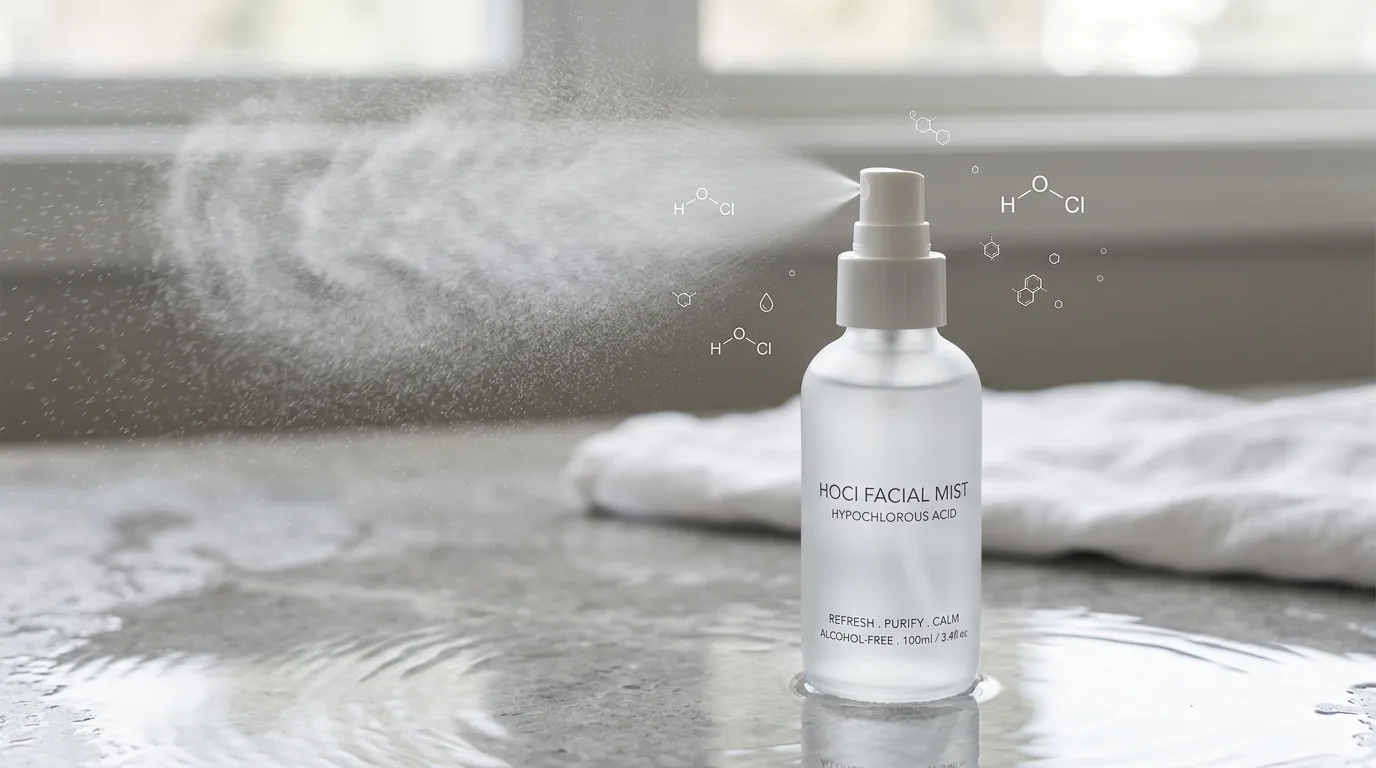
1. Innate Immunobiology: The Neutrophil Myeloperoxidase (MPO) Pathway
Hypochlorous acid is not a synthetic chemical novelty; it is an endogenous molecule generated continuously by the human immune system. Whenever polymorphonuclear neutrophils encounter invading bacteria, fungi, or viruses, they undergo a rapid metabolic activation known as the oxidative (respiratory) burst:
1. Membrane NADPH Oxidase transfers electrons to O2 → Superoxide Anion (•O2−).
2. Superoxide dismutase converts superoxide → Hydrogen Peroxide (H2O2).
3. Azurophilic granules release Myeloperoxidase (MPO) into the phagolysosome.
4. MPO catalyzes the two-electron oxidation of chloride ions (Cl−) by H2O2:
H2O2 + Cl− + H+ → HOCl + H2O
Inside neutrophil phagosomes, HOCl oxidizes microbial membrane proteins within milliseconds, eradicating pathogens without causing collateral mutagenic harm. In topical dermatology, stabilized electrochemically activated HOCl mimics this precise innate defense—delivering therapeutic concentrations (typically 0.01% to 0.02% or 100 to 200 parts per million) directly to the stratum corneum surface without cytotoxicity to human keratinocytes.
Learn how non-irritating antimicrobial mists integrate into comprehensive recovery in The Reactive Skin Barrier Rehabilitation Protocol.
2. Physical Chemistry & Speciation: Why pH 4.5–5.5 Is Crucial
In aqueous solution, free available chlorine (FAC) exists in a dynamic equilibrium governed strictly by solution pH:
Understanding this equilibrium reveals why pH formulation makes the entire difference between a soothing, non-cytotoxic mist and a corrosive bleach solution:
Uncharged Hypochlorous Acid (HOCl)
At this pH, over 95% of active chlorine exists as HOCl. Because the molecule carries a neutral electrical charge, it effortlessly diffuses across bacterial lipid membranes. It is 80 to 100 times more bactericidal than hypochlorite ion and operates in harmony with the skin’s physiological acid mantle.
Hypochlorite Anion (OCl− / Bleach)
Above neutral pH, chlorine dissociates into the negatively charged hypochlorite ion (OCl−). Because bacterial cell walls are also negatively charged, electrostatic repulsion severely impedes penetration. Furthermore, alkaline pH denatures stratum corneum ceramides and inactivates acid-dependent lipid enzymes.
Stabilized Electrochemical Generation vs. Generic Bleach Products
Dermatological facial mists (such as Tower 28 SOS Daily Rescue, Briotech, and prescription Alevicyn) use specialized membrane electrolysis of pure sodium chloride solution to generate pure, stabilized HOCl without toxic chlorate, chlorite, or free chlorine gas byproducts. Cheap DIY "chlorine water" or diluted sodium hypochlorite solutions lack buffer stability, decompose within hours into alkaline salts, and inflict severe lipid barrier damage.
3. Antimicrobial & Biofilm Disruption: Balancing the Commensal Microbiome
How does HOCl kill pathogens so rapidly? The molecule’s low molecular weight (52.46 Da) and electrical neutrality allow it to penetrate microbial cell envelopes in seconds. Once inside, HOCl oxidizes essential sulfhydryl (-SH) thiol groups on vital metabolic enzymes, disrupts the electron transport chain, and inhibits DNA replication, delivering a 3-to-6 log reduction within 60 seconds against:
- Staphylococcus aureus & MRSA: Primary culprits in atopic eczema flares and barrier ulcerations.
- Cutibacterium acnes: The anaerobic trigger of inflammatory papules and pustules.
- Candida albicans & Malassezia globosa: Opportunistic fungal pathobionts that drive seborrheic dermatitis and fungal folliculitis.
The Biofilm Advantage & Microbiome Preservation
Pathogenic bacteria frequently construct slimy extracellular polymeric substances (EPS) known as biofilms that shield them from topical antibiotics. HOCl oxidizes the polysaccharide matrix of immature biofilms, unroofing persistent bacterial colonies.
Remarkably, clinical periocular swab evaluations (PMID: 28442740) demonstrate that a 0.01% HOCl hygiene mist reduces staphylococcal colony loads by 99.6% within 20 minutes without altering community phylogenetic diversity. By rapidly clearing pathogenic overgrowth, it allows beneficial commensals like Staphylococcus epidermidis to re-establish physiological equilibrium.
For individuals managing fungal acne alongside micro-inflammation, cross-reference ingredient safety in our Malassezia Comedogenicity Compendium.
4. Quenching Reactive Flushing: Mast Cell Stabilization & Anti-Pruritic Action
Many assume HOCl is purely an antimicrobial agent. However, in cellular physiology, HOCl exerts profound direct anti-inflammatory and anti-pruritic actions:
A. Intracellular NF-κB Downregulation
In keratinocytes and dermal fibroblasts, HOCl oxidizes regulatory cysteine residues on IκB kinase β (IKKβ), arresting the phosphorylation of IκB. Consequently, Nuclear Factor-kappa B (NF-κB) remains sequestered in the cytoplasm, shutting down transcriptional production of pro-inflammatory cytokines: Interleukin-6 (IL-6), Interleukin-2 (IL-2), and Tumor Necrosis Factor-alpha (TNF-α).
B. Cutaneous Mast Cell Stabilization & Rapid Itch Relief
Topical HOCl directly stabilizes cutaneous mast cells, preventing the exocytosis of pre-formed granules containing histamine, leukotriene B4 (LTB4), and tryptase. In randomized clinical trials on atopic dermatitis pruritus (PMID: 24282136), topical HOCl delivered statistically significant reductions in severe itching within 72 hours, with 74% of patients achieving complete comfort compared to 30% on vehicle controls.
C. Calming Post-Workout & Thermal Reactive Flushing
For individuals with erythematotelangiectatic rosacea, sodium chloride and lactic acid in facial sweat trigger transient receptor potential (TRPV1) activation and massive superficial vasodilation. A light misting of pure HOCl immediately neutralizes sweat-borne irritants, blunts neurogenic vasodilation, and quenches the sensation of skin "radiating heat."
For comprehensive guidance on mapping rosacea triggers and layering non-irritating actives, review Rosacea Subtypes & Azelaic Acid Protocols.
5. The Atelier Protocol: How to Integrate HOCl into Reactive Skincare
To obtain maximum therapeutic efficacy without disrupting topical active absorption:
Cadence 1: The Post-Workout / Mid-Day Reset: Mist generously across face and neck immediately following exercise, prolonged mask-wearing, or hot outdoor exposure. Allow to air-dry naturally. No rinsing required.
Cadence 2: Post-Cleansing Toning Step: After gentle cleansing, mist skin with HOCl. Wait 60 to 90 seconds for complete microbial oxidization and air-drying. Because HOCl breaks down into simple saline (saltwater), your skin is pristine and ready for barrier serums.
Critical Active Pairing Rule: Never mix HOCl directly in the palm with direct antioxidants like L-Ascorbic Acid (Vitamin C) or pure retinoids, as HOCl’s oxidizing nature will temporarily neutralize the antioxidant. Always allow HOCl to dry completely before applying serums.
Frequently Asked Questions: Hypochlorous Acid Spray
How is hypochlorous acid (HOCl) produced naturally by the human immune system?
During the human innate immune response, activated neutrophils undergo an oxidative 'respiratory burst.' Membrane-bound NADPH oxidase generates superoxide, which dismutates into hydrogen peroxide (H2O2). The primary granular enzyme myeloperoxidase (MPO) then uses H2O2 to oxidize chloride ions (Cl-) into endogenous hypochlorous acid (HOCl) within the phagolysosome to rapidly destroy engulfed pathogens.
Why is pure HOCl over 80 times more bactericidal than household bleach (OCl-)?
Hypochlorous acid has a pKa of ~7.46. In acidic environments (pH 4.5 to 5.5), chlorine exists almost entirely as uncharged, electrically neutral HOCl. Because bacterial cell walls carry negative surface charges, the uncharged HOCl molecule penetrates the lipid membrane instantly via passive diffusion. In contrast, alkaline bleach exists as the negatively charged hypochlorite ion (OCl-), which is electrostatically repelled by the bacterial membrane.
Can hypochlorous acid spray disrupt the beneficial skin microbiome?
At therapeutic facial concentrations (0.01% to 0.02% / 100 to 200 ppm), HOCl acts as an acute antimicrobial reset rather than a sterilizing disinfectant. Periocular and facial swab trials demonstrate that while HOCl reduces pathogenic Staphylococcal colony-forming units by over 99%, it preserves the overall phylogenetic diversity of commensal organisms like Staphylococcus epidermidis when used intermittently or post-sweat.
How does HOCl calm reactive facial flushing and stinging in rosacea?
Beyond its antimicrobial action, HOCl exerts direct anti-inflammatory and mast-cell stabilizing effects. It selectively oxidizes regulatory cysteine residues on IkappaB kinase (IKK), blocking Nuclear Factor-kappa B (NF-kB) activation and suppressing downstream transcription of Interleukin-6 (IL-6), TNF-alpha, and leukotriene B4. Simultaneously, it blunts histamine release from dermal mast cells, quenching microvascular hyper-reactivity and neurogenic stinging.