Dangerous Viral Beauty Hacks Debunked: Slugging on Active Flares & DIY Peels
On beauty algorithm feeds, complex dermatological treatments are flattened into snappy 15-second DIY challenges. Slathering pure petroleum jelly over pustular flares, leaving 30% acid peeling solutions on overnight, and dragging non-sterile needle rollers across cystic lesions are promised as instant glowing skin shortcuts. A master aesthetician and botanical chemist reviews the severe clinical biophysics behind these viral trends.
Clinical Safety Summary: Separating Skin Barrier Science from Virality
- 1. The Misapplied Occlusion Hazard: Petrolatum is a proven topical protectant for healthy, intact, dry skin. However, applying complete vapor occlusion over active inflammatory dermatoses (perioral dermatitis, rosacea, cystic acne) traps heat, intensifies penetration of underlying irritants, and macerates damaged tissue.
- 2. Chemical Burn Realities of DIY Peels: Misusing professional-strength 30% AHA rinse-off solutions as overnight treatments or applying unbuffered lemon juice (pH ~2.0) causes rapid cellular protein coagulation, deep chemical burns, and severe post-inflammatory hyperpigmentation (PMC9165630).
- 3. Home Microneedling Seeding: Rolling non-sterile needles over active inflammatory lesions inoculates pathogenic bacteria into the reticular dermis, triggering chronic foreign-body granulomas and permanent pitting scars.
1. The Social Media Skincare Wild West: Virality vs. Dermal Physiology
In the contemporary digital landscape, cosmetic guidance is no longer filtered through clinical textbooks or licensed dermatologists; it is dictated by recommendation algorithms that prioritize shock value, sensory satisfaction, and rapid DIY home transformations. When an influencer claims that coating their face in pure mineral petrolatum transformed their complexion overnight, millions of viewers copy the protocol without considering their individual dermal biology.
The fatal flaw of viral skincare advice is the assumption of a universal baseline: what functions as an effective occlusive seal on an intact, non-inflamed, healthy barrier can trigger a catastrophic inflammatory explosion on skin experiencing subclinical rosacea, impaired lipid bilayers, or perioral microbial imbalance.
Healthy stratum corneum consists of 15 to 20 layers of protein-rich corneocytes anchored in a crystalline matrix of ceramides, cholesterol, and free fatty acids. It naturally regulates trans-epidermal moisture diffusion and thermal dissipation. Compromised, reactive skin, by contrast, suffers from denuded intercellular lipids, exposed unmyelinated C-nerve fibers, disrupted acid mantle pH, and opportunistic microbial colonization. Applying high-intensity home hacks to an already wounded biological shield is akin to pouring gasoline onto an active fire.
Let us clinically deconstruct the three most hazardous viral skincare trends currently circulating online.
2. "Slugging" on Active Flares: The Biophysics of Misapplied Occlusion
Slugging—the practice of applying a thick, generous layer of 100% white petrolatum (Vaseline or Aquaphor) over the entire face as the final step of a nighttime skincare routine—has amassed billions of views across social media platforms. On the surface, the practice appears dermatologically sound: petrolatum is the single most potent occlusive agent known to cosmetic chemistry, capable of reducing Transepidermal Water Loss (TEWL) by more than 98%.
In appropriate clinical contexts (such as minor post-procedure surgical wounds, eczema on non-sebaceous limbs, or severely chapped lips), petrolatum provides an unparalleled protective shield. However, when consumers apply full-face petrolatum over active inflammatory flares, severe pathophysiological complications arise:
Thermal Dissipation Blockade & Rosacea
Human skin cools itself through evaporative water diffusion and micro-vascular radiation. When an impermeable vapor barrier of petrolatum covers the entire face, natural evaporative cooling is halted. Localized epidermal surface temperature rises (Contact Dermatitis, 2001). In rosacea patients, this localized thermal trap activates hypersensitive TRPV1 (transient receptor potential vanilloid 1) channels on sub-epidermal C-fibers, triggering massive rebound arteriolar vasodilation, burning, and severe erythema.
Microbial Trapping & Perioral Dermatitis
Applying petrolatum over active papules or micro-pustules traps endogenous sweat, sebum triglycerides, cellular debris, and microbial metabolites against the compromised tissue. In conditions driven by opportunistic yeast (such as Malassezia folliculitis) or perioral dermatitis, this creates a warm, macerated, occluded micro-environment that stimulates rapid bacterial and fungal proliferation, turning mild redness into full-blown papulopustular eruption.
The Co-Applied Active Penetration Multiplier
Another dangerous outcome of slugging occurs when users layer petrolatum directly over active cosmetic ingredients—such as retinoids, chemical acids (glycolic, salicylic), or Vitamin C. Under airtight occlusion, the percutaneous absorption rate of topical compounds increases exponentially. A mild 0.2% retinol or gentle 2% acid that is well-tolerated under normal atmospheric exposure suddenly penetrates at 3x to 5x potency, inducing acute chemical peeling, blistering, and stratum corneum sloughing.
3. The 30% AHA Overnight Disaster & DIY Kitchen Chemical Peels
Few beauty trends are as hazardous as the reckless misuse of high-strength chemical exfoliants. The most notorious viral hack involves taking an intense 30% Alpha Hydroxy Acid (Glycolic + Lactic) + 2% Salicylic Acid peeling solution (sold widely in distinctive blood-red bottles) and sleeping in it overnight under the mistaken belief that "more time on the skin equals more glow."
The Chemistry of Acid Burns & Protein Coagulation
A 30% concentration of free alpha-hydroxy acid formulated at pH 3.5 to 3.7 is engineered strictly as an in-clinic or highly supervised rinse-off exfoliant with a maximum contact window of 10 minutes. When left on the face for 8 hours of sleep:
- Basement Membrane Breach: The unbuffered acid molecules dissolve through all 20 layers of the stratum corneum and penetrate directly into the viable nucleated epidermis (stratum spinosum and stratum basale).
- Cellular Coagulation: Intracellular enzymes denature, cell membrane phospholipids lyse, and micro-capillary walls rupture, producing severe second-degree chemical burns.
- Severe Blistering & Desquamation: The patient wakes to excruciating facial burning, raw weeping dermal erosion, and widespread bullae (blistering).
Post-Inflammatory Hyperpigmentation (PIH) in Skin of Color (Fitzpatrick III–VI)
As detailed in clinical dermatological literature (PMC9165630), chemical peel complications are disproportionately severe in melanin-rich individuals (Fitzpatrick skin types III through VI). When severe acid burns trigger acute basement membrane inflammation, dermal melanocytes undergo intense, prolonged hyperactivity. Melanin granules are deposited deep into the papillary and reticular dermis (pigment incontinence), resulting in dark, disfiguring post-inflammatory hyperpigmentation (PIH) that often requires 12 to 24 months of medical intervention to resolve.
Kitchen Chemistry Folklore: Lemon Juice & Aspirin Masks
Equally alarming are viral DIY home kitchen concoctions:
Pure lemon juice is highly acidic and contains phototoxic furocoumarins (psoralens). When lemon-treated skin is exposed to solar UV radiation, psoralens intercalate into epidermal DNA, causing phytophotodermatitis—a catastrophic, blistering sunburn-like chemical reaction that leaves permanent hyperpigmented streaks.
Influencers claim crushing aspirin tablets into water creates a "salicylic acid acne mask." Chemically, aspirin is acetylsalicylic acid, not cosmetic salicylic acid. Unbuffered, crushed aspirin particles form coarse, sharp crystals that cause micro-mechanical abrasions and severe irritant contact eczema on facial skin.
4. At-Home Microneedling: The Infection & Granuloma Hazard
Clinical microneedling (collagen induction therapy) is an established in-office dermatological procedure performed with sterile, single-use, vertically reciprocating medical cartridges. In contrast, the viral internet popularized inexpensive (\$8 to \$15) plastic derma rollers purchased from unverified e-commerce marketplaces for home bathroom use.
As documented in independent biomedical device studies and FDA consumer warnings (Biomed Microdevices, 2019), at-home rolling presents grave clinical risks:
| Complication Factor | In-Office Medical Microneedling | At-Home Bathroom Derma Roller |
|---|---|---|
| Needle Geometry & Entry Angle | Strict 90° vertical automated entry & exit | Rotational shear; needles enter and drag out at an angle |
| Sterilization Standard | Gamma-irradiated, sterile single-use cartridge | Reused plastic roller rinsed in rubbing alcohol (non-sterile) |
| Active Acne Seeding Risk | Contraindicated over active lesions; avoided by clinician | High: Roller spreads bacterial pustules across entire face |
| Foreign-Body Granuloma Risk | Near zero; sterile saline/HA infusion only | Severe: Cosmetic preservatives/fragrances pushed into dermis |
When users roll a multi-needle drum across an active inflammatory pimple or pustule, the needles puncture the infected follicle and transfer viable Cutibacterium acnes and Staphylococcus aureus colonies across hundreds of micro-puncture channels across the cheeks. Furthermore, applying standard non-sterile cosmetic serums containing preservatives (such as phenoxyethanol), fragrances, or colorants immediately after rolling inoculates foreign particles deep into the dermal matrix, provoking intractable foreign-body granulomas—hard, inflammatory subcutaneous nodules that often require intralesional corticosteroid injections to flatten.
5. Emergency Clinical Damage Control & Barrier Rehabilitation
If you or a client has fallen victim to a viral skincare experiment and is currently experiencing acute chemical burning, severe stinging, or inflamed barrier collapse, execute this emergency clinical protocol immediately:
Immediate Copious Water Lavage (Do NOT Use Baking Soda)
If an acidic product is burning, flush the skin under gentle, lukewarm or cool running tap water continuously for 10 to 15 minutes. Never apply baking soda (sodium bicarbonate) to neutralize an acid peel; neutralizing a strong acid with a strong base triggers an immediate exothermic chemical reaction, releasing intense thermal heat that causes second-degree thermal burns on top of the acid burn. Dilution with water is the only safe intervention.
Deploy The Physiological 3:1:1 Equimolar Lipid Emulsion
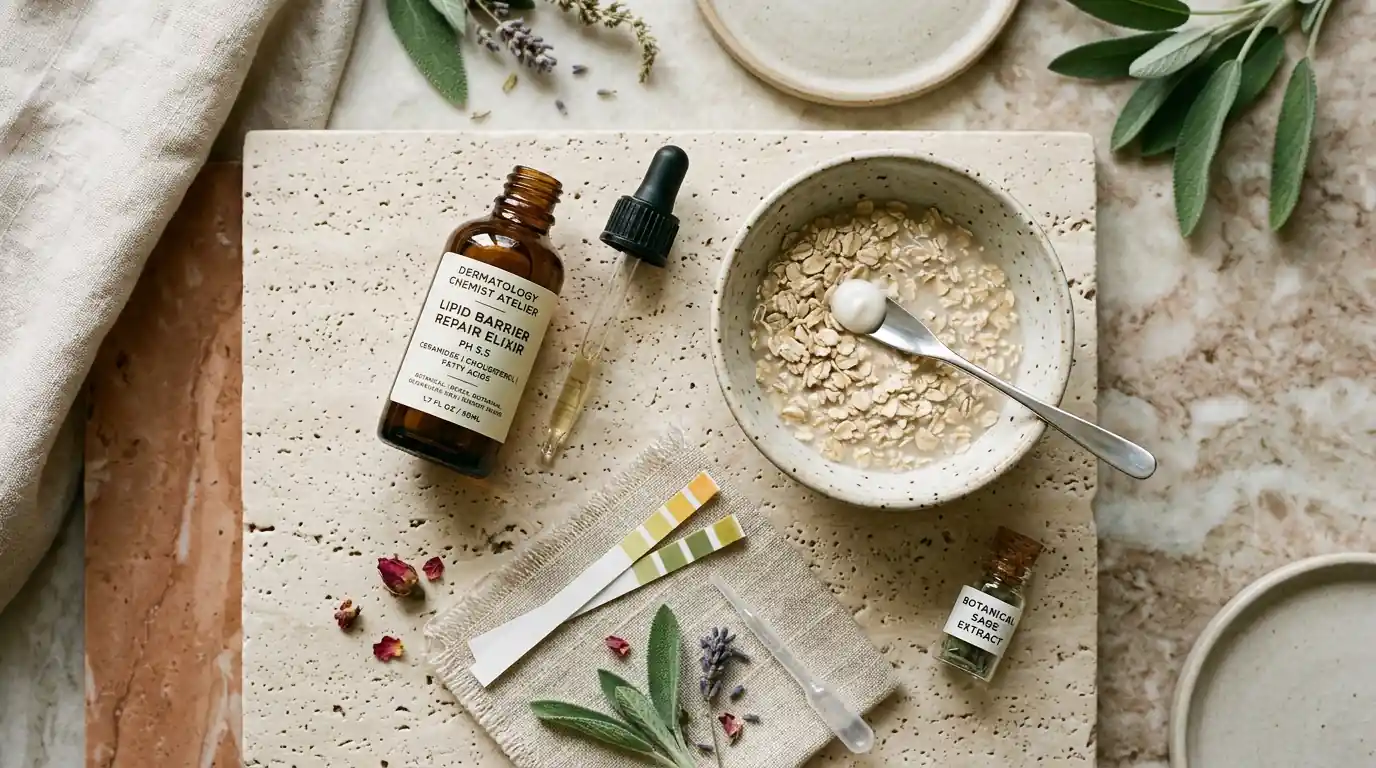
Rather than smothering wounded tissue in 100% occlusive petrolatum (which traps heat and delays cellular breathing), apply a medical-grade physiological lipid barrier cream formulated with the 3:1:1 ratio: 3 parts Ceramides, 1 part Cholesterol, and 1 part Free Fatty Acids (PMC3070468). This equimolar formulation actively integrates into disrupted lamellar bilayers, accelerating re-epithelialization by over 40%.
Incorporate Pharmaceutical Colloidal Oat & Madecassoside
Apply compresses soaked in pure pharmaceutical-grade colloidal oat suspension (Avena sativa). Rich in avenanthramides and beta-glucan, colloidal oat blocks NF-kB transcription pathways, rapidly extinguishing acute erythema and burning. Follow with high-purity madecassoside (from Centella Asiatica) to stimulate type I and type III collagen synthesis during epidermal re-epithelialization.
6. Frequently Asked Questions: Viral Skincare Safety & Myth-Busting
Is slugging ever beneficial for people with dry skin? ↓
Yes. For individuals with naturally alipoid (genetically dry) skin with an intact, non-inflamed barrier during harsh, freezing winter months, applying a thin layer of petrolatum over a hydrating humectant serum once or twice weekly can be an effective way to shield against arid ambient air. The danger arises when it is used over acne-prone, rosacea-afflicted, or reactive skin.
What should I do if my skin turns raw and weeps after a DIY peel? ↓
Raw, weeping skin indicates a second-degree chemical burn where the epidermal roof has detached. Do not apply over-the-counter acne products, acids, or oils. Apply sterile saline compresses and a thin layer of prescription burn dressing or medical petrolatum under sterile gauze, and seek immediate clinical care from a board-certified dermatologist or urgent care center to prevent bacterial infection and permanent scarring.
Can I disinfect my derma roller with boiling water? ↓
No. Boiling water warps and melts the plastic hub holding the needles and causes microscopic surgical steel or titanium tips to bend, curl, or dull. Rolling bent needles across the face creates microscopic jagged tears in the stratum corneum rather than clean puncture wounds, resulting in severe micro-scarring.
How long does it take for a destroyed skin barrier to fully heal? ↓
While acute stinging and surface redness may calm within 5 to 7 days of eliminating irritants and applying 3:1:1 lipid creams, full cellular restoration requires a complete 28-to-40-day epidermal turnover cycle. During this recovery window, avoid all physical scrubs, chemical acids, and retinoids.
Clinical Evidence & Peer-Reviewed References
- Dermatology & Therapy: Complications of Chemical Peels: Diagnosis and Management. Dermatol Ther. 2022. PMCID: PMC9165630. PMC Article.
- Biomedical Microdevices: Safety and Dermatotoxicology of Microneedling Devices: Infection, Granulomas, and Micro-Scarring. Biomed Microdevices. 2019. Springer Study.
- Journal of Clinical & Aesthetic Dermatology: Ceramide-dominant 3:1:1 physiological lipid emulsion in cutaneous barrier repair. J Clin Aesthet Dermatol. PMCID: PMC3070468 & PMC8468445. PMC Article.
- Contact Dermatitis: Occlusion kinetics, thermal retention, and percutaneous absorption enhancement of topical agents under petrolatum films. Contact Dermatitis. doi:10.1034/j.1600-0536.2001.044004201.x.
- American Academy of Dermatology (AAD): Chemical Peels Overview, Safety Hazards, and Complication Warnings. AAD Guidelines 2024. AAD Resources.