The Fungal Acne Ingredient Blacklist: Esters, Fatty Acids & Lipids That Feed Malassezia
Malassezia yeasts are lipid-dependent organisms unable to synthesize their own fatty acids. When skincare products supply carbon chains between C11 and C24, these commensal yeasts multiply uncontrollably, erupting into itchy, uniform follicular bumps. Here is your definitive biochemical blacklist.
The Core Biochemical Rule of Malassezia
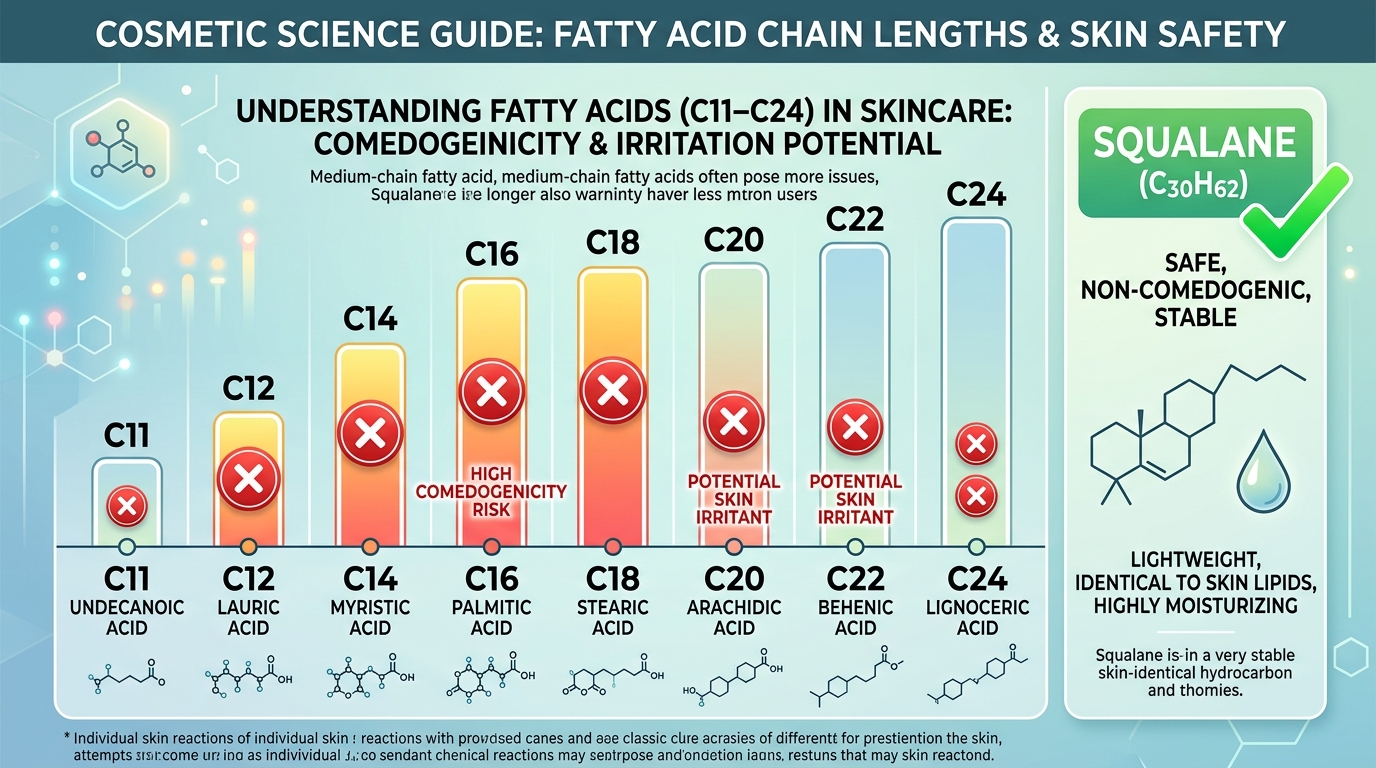
The genus Malassezia (predominantly M. globosa and M. restricta on facial skin) lacks genes encoding fatty acid synthase (FAS). Consequently, they must scavenge pre-formed fatty acids possessing carbon chain lengths of 11 to 24 carbons. If a cosmetic ingredient contains, cleaves into, or is esterified from a C11–C24 lipid, it represents potential metabolic fuel.
1. Category One: Free Fatty Acids (The Direct Metabolites)
Free fatty acids are incorporated into creams and lotions to provide structure, body, and emollience. Because they do not require enzymatic cleavage, they are immediately bioavailable to follicular yeasts:
| Chemical Name (INCI) | Carbon Chain | Why Malassezia Consumes It |
|---|---|---|
| Lauric Acid | C12:0 | Shortest saturated chain heavily utilized by M. globosa |
| Myristic Acid | C14:0 | Rapidly internalized through yeast membrane fatty acid transporters |
| Palmitic Acid | C16:0 | Primary structural lipid found in human sebum; robust yeast fuel |
| Stearic Acid | C18:0 | Extremely common thickener in standard moisturizers; heavily metabolized |
| Oleic Acid | C18:1 (cis-9) | Potent trigger for Malassezia lipase secretion and skin barrier perturbation |
| Linoleic & Linolenic Acid | C18:2 / C18:3 | Essential omega fatty acids that nevertheless fall within C11-C24 yeast window |
2. Category Two: Fatty Acid Esters (The Enzymatic Trap)
Many consumers believe that if a product is "oil-free," it is safe for fungal acne. This is a hazardous misconception. Cosmetic chemists frequently replace whole botanical oils with synthetic fatty acid esters to impart a silky, non-greasy finish.
However, Malassezia species express multiple extracellular lipase and carboxylesterase enzymes (specifically LIP1 through LIP10). These fungal enzymes hydrolyze ester bonds within minutes of skin contact, splitting the synthetic molecule into its constituent alcohol and free C11–C24 fatty acid.
High-Risk Esters to Blacklist Immediately:
3. Category Three: Polysorbates and PEG Fatty Acid Ethers
Polysorbates are non-ionic surfactants utilized ubiquitously as cleansing agents, solubilizers for essential oils, and stabilization aids in lightweight serums. Because they are technically categorized as synthetic polyoxyethylene derivatives, consumers rarely suspect them of carrying lipid feeds.
Every polysorbate is synthesized by ethoxylating a sorbitan ring that has been esterified with a specific fatty acid:
- Polysorbate 20 (Tween 20): Esterified with Lauric Acid (C12).
- Polysorbate 40 (Tween 40): Esterified with Palmitic Acid (C16).
- Polysorbate 60 (Tween 60): Esterified with Stearic Acid (C18).
- Polysorbate 80 (Tween 80): Esterified with Oleic Acid (C18:1). In microbiological laboratories, Polysorbate 80 is actually added to culture media to cultivate and grow Malassezia species in petri dishes!
4. Category Four: Natural Botanical Oils and Butters (All Whole Oils)
With the sole exceptions of fractionated C8/C10 MCT oil and pure squalane, all natural plant oils, nut butters, and seed oils contain triglycerides built of C12–C24 fatty acids. Even lightweight oils marketed for acne-prone skin (such as rosehip, hemp seed, black cumin, and tamanu oil) are predominantly composed of oleic, linoleic, and linolenic acids.
Common culprits that must be eliminated during fungal folliculitis flares include:
Shea Butter (Butyrospermum parkii): ~45% stearic acid, ~45% oleic acid.
Jojoba Seed Oil (Simmondsia chinensis): Liquid wax ester consisting of C20 and C22 eicosenoic/docosenoic chains.
Argan & Marula Oils: Extremely rich in oleic acid (C18:1).
Rosehip Seed Oil: ~80% polyunsaturated C18 linoleic/linolenic acids.
5. The 100% Fungal Acne Safe Replacement Matrix
Eliminating problematic lipids does not mean your skin must suffer from barrier dehydration. In fact, replacing complex esters with non-metabolizable biomimetic lipids stabilizes the epidermal moisture barrier without fueling fungal proliferation:
| Functional Role | Blacklisted Ingredient | Safe Replacement Alternative |
|---|---|---|
| Lipid Emollient / Sealant | Jojoba oil, Rosehip, Shea butter | 100% Sugarcane Squalane (C30 hydrocarbon) or Pure Caprylic/Capric Triglyceride (C8/C10 only) |
| Emulsifier / Cream Base | Glyceryl Stearate, Polysorbate 60/80 | Polyacrylate Crosspolymer-6, Ammonium Acryloyldimethyltaurate/VP, Hydroxyethyl Acrylate |
| Hydrating Humectant | Galactomyces & Ferment filtrates | Hyaluronic acid (various MWs), Glycerin (pure), Beta-Glucan, Ectoin, Panthenol (B5) |
| Occlusive Night Mask | Beeswax, Cocoa butter, Lanolin | 100% Pure Cosmetic White Petrolatum or Dimethicone / Cyclopentasiloxane silicones |
6. Routine Protocol: Managing an Active Fungal Flare
When transitioning a patient or client with active Malassezia folliculitis away from blacklisted products, we recommend an initial 14-day clearance protocol:
- Strict Ingredient Blacklist Purge: Inspect every single cleanser, serum, toner, moisturizer, sunscreen, and foundation against the C11–C24 lipid rule. A single non-compliant item will continue feeding the yeast.
- Anti-Fungal Active Interventions: Incorporate topical Ketoconazole 2% shampoo as a 5-minute facial mask 2–3 times weekly, or utilize zinc pyrithione / sulfur-based wash solutions.
- Barrier Hydration With Squalane: Layer pure water-based humectants (such as 2% hyaluronic acid or centella asiatica extract) sealed with 2–3 drops of pure sugarcane squalane.
Frequently Asked Questions: Fungal Acne Ingredients
Why do polysorbates trigger fungal acne when they are not oils?
Polysorbates (such as Polysorbate 20, 40, 60, and 80) are ethoxylated sorbitan esters synthesized by attaching fatty acids to a sorbitol ring. For example, Polysorbate 20 contains lauric acid (C12), while Polysorbate 80 contains oleic acid (C18:1). Malassezia yeasts secrete esterase enzymes that cleave these free fatty acids directly from the emulsifier molecule, utilizing them as nutrients.
Are all fermented ingredients dangerous for Malassezia folliculitis?
Yeasts and ferment filtrates (such as Galactomyces, Saccharomyces, Bifida, and Lactobacillus ferment filtrates) should be avoided during active fungal acne flares. While ferment filtrates themselves may not contain C11-C24 lipids, they can alter the cutaneous microbiome balance and provide enzymatic cofactors that encourage yeast proliferation.
Can I use ceramides if I have fungal acne?
Pure synthetic ceramides (such as Ceramide NP, AP, and EOP) are generally safe when formulated in water-based gel matrices. However, commercial ceramide complexes often contain cholesterol, free fatty acids (like stearic acid), and emulsifiers (such as polyglyceryl esters or ceteareth) that are problematic. Always verify the secondary carrier ingredients.