Filter-Free Dermal Texture: Sebaceous Filaments vs Enlarged Pores
Digital beauty culture has spent the last decade selling an anatomically impossible fantasy: human skin as smooth, poreless, and reflective as polished porcelain. Millions of consumers scrutinize their reflection in 10x magnifying mirrors, mistaking healthy, functioning sebaceous filaments for diseased blackheads. In response, aggressive pore vacuums, adhesive peel-off strips, and harsh mechanical extractions are deployed—frequently resulting in broken facial capillaries and permanent barrier breakdown. A botanical chemist and master aesthetician deconstructs follicular anatomy.
The Follicular Triad: Clinical Distinctions at a Glance
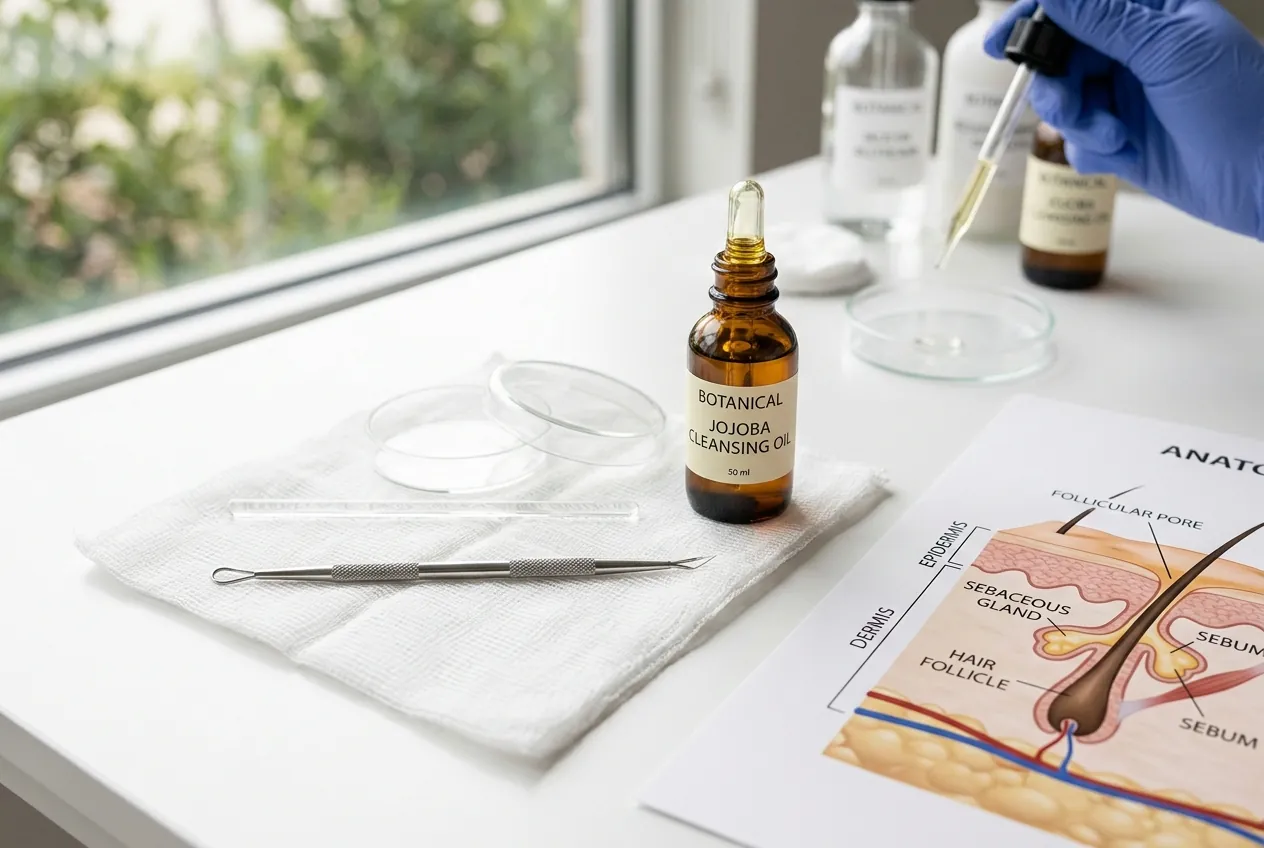
1. The Social Media Delusion: Glass Skin Filters vs. Dermal Physiology
The modern skincare consumer is subjected to an unrelenting barrage of digitally manipulated skin imagery. Ring lighting, smoothing algorithms, 4K diffusion filters, and post-production color grading erase every trace of human texture, creating an aesthetic expectation that contradicts basic biological anatomy.
The human face possesses approximately 20,000 pilosebaceous units. Each pore is not an accidental defect; it is the structural exit duct for a hair follicle and its associated multilobular sebaceous gland. These ducts are essential for cutaneous homeostasis, delivering endogenous lipids (squalene, wax esters, triglycerides, and free fatty acids) that lubricate the stratum corneum, support the acid mantle (pH 4.7–5.5), and deliver fat-soluble antioxidant defense in the form of alpha-tocopherol (Vitamin E).
When consumers attempt to "erase" pores or eliminate every visible dot on their nose and chin, they are waging war against an indispensable biological delivery system. Understanding the histological structure of what is actually inside those follicular openings is the first step toward skin peace.
2. Histological Anatomy: Sebaceous Filaments vs. True Blackheads
The definitive dermatological literature on follicular anatomy—pioneered by Plewig and Wolff (PMID: 130839) and affirmed by contemporary investigations (PMC10712575)—draws a rigorous histological distinction between physiological sebaceous filaments and pathological open comedones:
Sebaceous Filaments (Physiological)
A sebaceous filament is a soft, cohesive cylinder that fills the follicular infundibulum without obstructing it. It is composed of a porous matrix of sebum lipids, loosely laminated parakeratotic corneocytes shed from the follicular wall, and microscopic vellus hair fragments.
Because the duct remains open and uncompacted, sebum flows continuously along the filament to the skin surface. When viewed under magnification, filaments are light grey, pale yellow, or translucent, flush with the epidermal surface, and completely asymptomatic.
Open Comedones / Blackheads (Pathological)
In contrast, an open comedone is an active lesion of acne vulgaris. It originates from follicular retention hyperkeratosis: abnormally sticky, compact corneocytes combine with dense sebum to form a solid, impassable plug that distends and deforms the follicular canal.
The characteristic dark appearance of a blackhead is not dirt, nor is it purely oxidized sebum. It results from densely packed melanin granules produced by follicular melanocytes that undergo oxidation upon exposure to ambient air at the distended ostium. Blackheads feel distinctly elevated and can progress to inflammatory papules.
When a sebaceous filament is squeezed out, it emerges as a thin, soft, thread-like filament (hence the Latin root filum). Because the sebaceous gland continues synthesizing lipids at a steady physiological rate, the follicular infundibulum naturally replenishes itself within 48 to 72 hours. Squeezing or suctioning them produces no permanent reduction in visibility.
3. The Pore Vacuum Trap: Why Negative Pressure Destroys Capillaries
Among the most damaging viral beauty trends of recent years is the widespread commercialization of handheld at-home pore vacuums and microdermabrasion suction devices. Promoted with dramatic close-up videos of sebum being yanked from pores, these tools subject facial skin to powerful mechanical negative pressure.
Facial skin, particularly around the nasal ala, bridge, and medial malar cheeks, is permeated by an intricate, highly delicate network of superficial capillary loops situated in the papillary dermis. These microvessels possess walls composed of a single layer of endothelial cells supported by fragile basement membranes.
Negative suction pressure applies mechanical traction that exceeds the tensile strength of superficial capillary walls. This results in immediate petechiae (pinpoint intradermal hemorrhages), ecchymosis (bruising), and microvascular rupture.
Over repeated use, the damaged capillaries undergo abnormal neo-angiogenesis and permanent dilation, creating chronic linear and arborizing telangiectasias (spider veins) that cannot be resolved with skincare and require costly vascular laser therapy (such as 595nm pulsed-dye laser) to correct.
The Biological Reality of Pore Sizing
A common myth perpetuated by beauty marketing is that pores "open" with steam and "close" with cold water or astringents. In human anatomy, follicular ostia do not possess circular smooth muscle sphincters. They cannot actively constrict or dilate on command.
According to clinical studies in dermatologic surgery (PMID: 26918966), visible pore diameter is determined by three biological factors:
- 1. High Sebum Output Rate: Larger sebaceous glands produce greater fluid volume, necessitating a wider follicular aperture to channel lipids.
- 2. Loss of Dermal Elasticity: Chronic ultraviolet (UV) radiation and chronological aging degrade collagen fibers and elastin scaffolds surrounding the follicular sheath, allowing pore walls to slacken and flare outward.
- 3. Hair Follicle Volume: Coarser vellus or terminal facial hair naturally requires a larger follicular ostium.
4. Barrier-Safe Management for Reactive & Sensitive Skin
If pore vacuums and adhesive strips cause vascular trauma, how should individuals with visible sebaceous filaments safely minimize their appearance? At our Houston botanical chemistry atelier, we utilize biomimetic lipid solubilization and gentle, barrier-respecting keratolysis.
Biomimetic Oil Cleansing ("Like Dissolves Like")
Rather than violently pulling lipid plugs out with adhesive glue, utilize non-comedogenic botanical oils such as pure cold-pressed jojoba oil (a liquid wax ester structurally identical to human wax esters) or plant-derived squalane. As established in our analysis of comedogenicity testing myths, authentic plant esters do not occlude follicles when formulated properly. Massaged onto dry skin for 60 to 90 seconds, these oils dissolve oxidized surface sebum and soften follicular plugs without disrupting intercellular ceramides. Emulsify with warm water and follow with a mild, sulfate-free cleanser.
Lipophilic Salicylic Acid (BHA 0.5%–1.5%)
Unlike water-soluble alpha-hydroxy acids (glycolic or lactic acid), salicylic acid is lipid-soluble, allowing it to penetrate through oily follicular canals and dissolve intercellular desmosomes holding dead corneocytes together (PMC3366450, PMC10988741). For reactive or rosacea-prone skin, use a low concentration (0.5% to 1.0%) buffered at pH 3.8 to 4.2 only once or twice weekly to avoid barrier irritation.
Polyhydroxy Acids (Gluconolactone) for Sensitive Skin
For individuals who cannot tolerate salicylic acid due to perioral dermatitis (managed via zero-therapy protocols) or erythematotelangiectatic rosacea, gluconolactone provides an exceptional alternative (see our PHA gluconolactone vs. salicylic acid comparison). Possessing a much larger molecular weight, gluconolactone exfoliates slowly at the surface level, acts as a potent humectant, and chelates free radicals without penetrating deep enough to irritate sensory nerve fibers.
Topical Niacinamide (2%–4%) for Sebum Regulation
Topical vitamin B3 (niacinamide) regulates sebaceous gland lipid synthesis, downregulating excessive sebum output without causing dehydration. Furthermore, niacinamide stimulates ceramide biosynthesis in keratinocytes, supporting reactive skin barrier rehabilitation and preventing pores from slumping outward into exaggerated oval craters.
5. The Aesthetician's Mindset Shift: Embracing Dermal Realism
The ultimate antidote to pore anxiety is not an expensive extraction gadget or a harsher acid peel; it is a fundamental shift in dermatological perspective. Human skin is a living, dynamic respiratory and immunological barrier—not an inert sheet of glass.
When you observe tiny grey or translucent dots across your nose from arm's length in natural daylight, you are viewing healthy, functioning sebaceous conduits delivering vital antioxidants to your skin. Demanding total absence of texture is a recipe for chronic inflammation, barrier degradation, and vascular fragility. By treating your skin with physiological respect rather than mechanical aggression, you cultivate lasting dermal health and authentic radiance.
6. Frequently Asked Questions: Sebaceous Filaments & Pore Health
Why do my sebaceous filaments return so quickly after extraction? ↓
Because sebaceous filaments are normal physiological structures, not dirt. Your sebaceous glands produce sebum continuously to lubricate the stratum corneum and maintain the acid mantle. When mechanically extracted, the gland continues pumping sebum into the follicular canal, refilling the filament within 48 to 72 hours.
Can cold water or ice permanently shrink enlarged pores? ↓
No. Pores do not possess circular muscles that contract. Cold water causes temporary vasoconstriction of superficial blood vessels and mild transient cellular swelling, creating a brief optical illusion of tighter pores for 15 to 30 minutes. Pore diameter is determined by genetics, sebum output, and structural collagen support.
Are adhesive pore strips safe to use on the nose once a week? ↓
Pore strips are strongly discouraged for sensitive or reactive skin. The aggressive adhesive bonds not only to follicular plugs but also to viable stratum corneum corneocytes, stripping the outer lipid barrier upon removal. Repeated use can trigger perioral dermatitis flares, telangiectasia, and contact irritant dermatitis.
What should you do if a pore vacuum has caused broken red capillaries on your cheeks? ↓
Immediately discontinue using suction devices. Once superficial capillaries dilate and rupture into permanent telangiectasias, topical skincare cannot rebuild the vessel wall. Calm acute bruising with cool compresses and 3:1:1 lipid moisturizers, and consult a dermatologist for in-office vascular laser treatments (such as pulsed dye laser or KTP laser) to coagulate the dilated vessels.
Can sunscreen make sebaceous filaments look worse or cause more blackheads? ↓
Heavy, solvent-based sunscreens with comedogenic esters (such as isopropyl myristate or ethylhexyl palmitate) can settle into pores and oxidize. However, non-comedogenic, mineral-based sunscreens using non-nano zinc oxide in a lightweight fluid base are essential. Daily UV protection prevents solar elastosis—the breakdown of elastin fibers that leads to permanently slackened, enlarged pores.
Clinical Evidence & Peer-Reviewed References
- Cureus: A Case Report of Sebaceous Filaments: Clinical Presentation, Follicular Histopathology, and Differential Diagnosis. Mineroff JP, Hyde JT, Hsu S. Cureus. 2023;15(11):e48656. PMCID: PMC10712575. PMC Article.
- Dermatologic Surgery: Facial Pores: Definition, Causes, and Treatment Options. Lee SJ, Seok J, Jeong SY, Park KY, Li K, Seo SJ. Dermatol Surg. 2016;42(3):277–285. PMID: 26918966. PubMed Abstract.
- Journal of Clinical and Aesthetic Dermatology: Over-the-Counter Acne Treatments: A Review of Salicylic Acid, Lipophilic Exfoliation, and Follicular Dynamics. Leung AKC, Barankin B, Lam JM, Leong KF, Hon KL. J Clin Aesthet Dermatol. 2016;9(5):21–29. PMCID: PMC3366450. PMC Article.
- Skin Health and Disease: Overview of popular cosmeceuticals in dermatology: Salicylic acid and barrier-conscious exfoliation. Crous C, Pretorius J, Petzer A. Skin Health Dis. 2024;4(2):e340. PMCID: PMC10988741. PMC Article.
- Archives of Dermatological Research: Sebaceous Filaments (Author's Transl). Plewig G, Wolff HH. Arch Dermatol Res. 1976;255(1):9–21. PMID: 130839. PubMed Abstract.
- Journal of Cosmetic Dermatology: Clinical Efficacy of a Salicylic Acid–Containing Gel on Acne Management and Skin Barrier Function: A 21-Day Prospective Study. Liu Y, Dan Y, Yang J, et al. J Cosmet Dermatol. 2025;24(7):e70353. PMCID: PMC12274963. PMC Article.