Sulfur Ointments: Keratolytic Chemistry in Perioral Dermatitis & Papulopustular Acne
When reactive facial skin develops persistent perioral clusters of pinpoint pustules, flaky erythema around the nasolabial folds, or inflamed papules that resist standard acne regimens, typical topical solutions frequently backfire. Salicylic acid stings, benzoyl peroxide strips the acid mantle, and topical steroids trigger catastrophic rebound flares. In these volatile conditions, precipitated sulfur offers a time-tested, multi-targeted biochemical mechanism that resolves inflammation without oxidative tissue destruction.
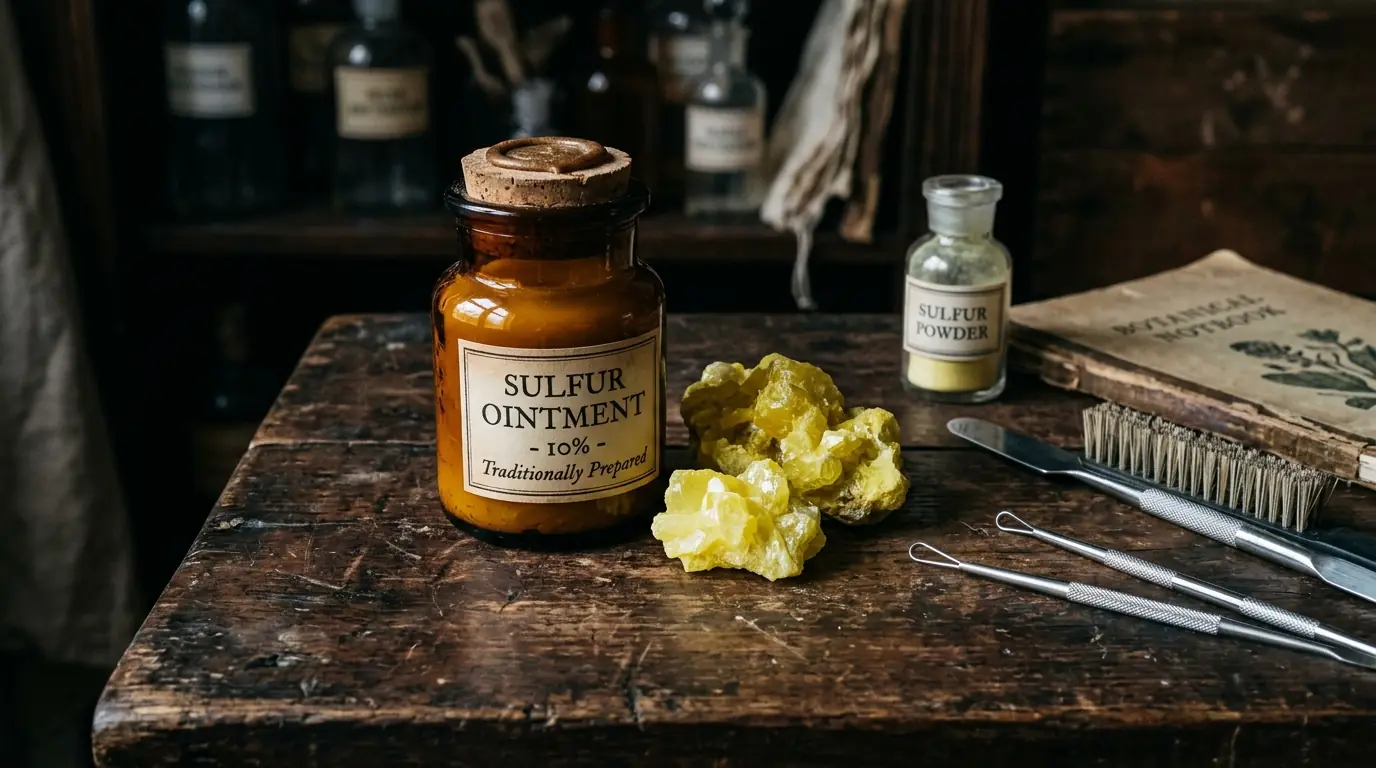
1. The Sulfur-Cysteine Redox Reaction: How Elemental Sulfur Becomes Active
Elemental sulfur exists predominantly as an octatomic cyclic yellow crystalline solid (S8). In its pure elemental state, sulfur is biologically inert and cannot penetrate intact microbial membranes. Its clinical magic occurs through an enzymatic and non-enzymatic biochemical reduction that takes place directly on human skin.
When micronized precipitated sulfur is massaged onto the stratum corneum, it reacts with the free sulfhydryl (-SH) thiol groups of cysteine residues present in keratin proteins:
1. Elemental Sulfur (S8) + 2 Keratinocyte Cysteine-SH → Cystine (disulfide bridge) + Hydrogen Sulfide (H2S).
2. Cutaneous microflora enzymes catalyze oxidation → Pentathionic Acid (H2S5O6).
3. Active Outcomes:
• Hydrogen Sulfide (H2S): cleaves intercorneocyte disulfide bonds, softening and dissolving follicular plugs.
• Pentathionic Acid: exerts direct fungicidal and bacteriostatic activity against opportunistic pathobionts.
Keratoplastic Action (2% – 5%)
At lower concentrations, sulfur encourages physiological epidermal differentiation and normal stratum corneum maturation without excessive peeling, soothing chronic scaling around facial folds.
Keratolytic Action (5% – 10%)
At higher therapeutic doses, abundant H2S actively dissolves follicular keratinous plugs, loosening impacted sebum and venting trapped papules and pustules.
To understand the foundational principles of resolving inflammatory facial eruptions, explore our core guide: The Perioral Dermatitis Zero-Therapy Method.
2. Perioral Dermatitis: Why Sulfur Succeeds Where Steroids and Antibiotics Struggle
Perioral dermatitis (POD) is a stubborn, inflammatory dermatosis characterized by erythematous micropapules and microvesicles clustered around the mouth, chin, and nasolabial folds—often sparing a characteristic narrow clear zone immediately adjacent to the vermilion border.
The most frequent etiology of severe, intractable POD is the inappropriate use of topical corticosteroids (hydrocortisone, triamcinolone). Steroids provide misleading 24-hour relief by forcefully constricting local microvasculature and suppressing local immunity. However, when discontinued, they trigger massive steroid rebound flares, characterized by intense burning, vasodilation, and follicular bacterial proliferation.
- Non-Steroidal Remission: Sulfur resolves the inflammatory papules without causing vascular dependence, dermal thinning, or rebound vasodilation.
- Zero Resistance Development: While prolonged use of topical antibiotics (clindamycin, erythromycin) rapidly selects for resistant staphylococcal strains, sulfur’s elemental redox mechanism prevents bacterial resistance.
- Acaricidal Cross-Coverage: Many refractory POD cases exhibit microscopic Demodex mite migration from adjacent rosacea-affected cheek zones. Sulfur significantly reduces Demodex density.
If your barrier has been thinned by active stacking or steroids, review the complete cellular rebuilding protocol in The Reactive Skin Barrier Rehabilitation Protocol.
3. Sulfur vs. Benzoyl Peroxide: Avoiding Free-Radical Barrier Stripping
In conventional acne vulgaris treatment, benzoyl peroxide (BPO) is considered the gold-standard bactericidal agent. However, in individuals with sensitive, reactive, or rosacea-prone skin, BPO can trigger devastating barrier destruction:
Benzoyl Peroxide: The Oxidative Radical Attack
BPO decomposes on skin into benzoic acid and hydrogen peroxide, generating an aggressive free-radical oxidative burst. While this destroys anaerobic Cutibacterium acnes, it simultaneously oxidizes stratum corneum squalene and unsaturated fatty acids, triggers cell apoptosis, denatures skin proteins, and precipitates severe contact dermatitis.
Sulfur: Controlled Thiol Redox Chemistry
Sulfur operates without generating reactive oxygen species (ROS). Instead of detonating oxidative stress in cellular membranes, it utilizes native keratinocyte cysteine. In comparative clinical trials for papulopustular rosacea (PMID: 16047874), 10% sodium sulfacetamide with 5% sulfur achieved an 80% inflammatory lesion reduction and superior erythema clearance compared to standard topical metronidazole—with zero free-radical tissue destruction.
For patients navigating co-occurring erythema and facial flushing alongside pustules, cross-reference our diagnostic criteria in Rosacea Subtypes & Azelaic Acid Protocols.
4. The Short-Contact Therapy (SCT) Protocol: Maximizing Results, Eliminating Dryness
The most significant barrier to successful sulfur treatment is vehicle design. Popular over-the-counter formulations—such as classic De La Cruz 10% Sulfur Ointment—suspend precipitated sulfur in dense polyethylene glycol (PEG) or heavy petrolatum bases.
If left on the skin overnight, these heavy occlusive vehicles trap heat and sebum, creating an anaerobic greenhouse that can induce occlusive folliculitis and severe secondary xerosis. To extract maximum antimicrobial benefits while protecting lipid barrier integrity, aesthetic chemists employ Short-Contact Therapy (SCT):
Step 1: Gentle Pre-Cleansing: Cleanse face using only lukewarm water or a non-foaming, physiological-pH micellar solution. Gently pat dry with a clean cotton towel. Never apply sulfur to damp, wet skin.
Step 2: Targeted Thin-Film Application: Take a pea-sized amount of 10% precipitated sulfur ointment. Gently apply an ultra-thin layer exclusively over the perioral papules, chin pustules, or rosacea bumps. Avoid rubbing aggressively.
Step 3: The 10-to-15 Minute Window: Set a timer for exactly 10 to 15 minutes. This is sufficient time for keratinocyte cysteine to react with sulfur and release therapeutic H2S at the follicular level.
Step 4: Lukewarm Water Rinse: Thoroughly rinse the ointment off using generous splashes of lukewarm water. No harsh foaming soap is required; the water solubilizes the hydrophilic base.
Step 5: Barrier Buffering: Immediately replenish stratum corneum hydration with a minimal, non-comedogenic squalane serum or pure physiological lipid moisturizer.
Frequently Asked Questions: Sulfur Ointment Science
How does elemental sulfur convert into active hydrogen sulfide in human skin?
Topically applied elemental sulfur (octasulfur, S8) is not biologically active in its crystalline state. Upon contact with the stratum corneum, it undergoes a chemical redox reaction with the sulfhydryl groups (-SH) of cysteine amino acids present in keratinocytes. This reaction generates cystine, hydrogen sulfide (H2S), and pentathionic acid (H2S5O6). The generated H2S cleaves intercorneocyte disulfide bonds to induce gentle desquamation, while pentathionic acid exerts potent antimicrobial and antifungal action.
Why is sulfur preferred over topical corticosteroids for perioral dermatitis?
Topical corticosteroids trigger local cutaneous immunosuppression and vasoconstriction that temporarily masks symptoms, only to induce aggressive rebound erythema, telangiectasia, and dense papular flares upon discontinuation. In contrast, sulfur provides non-steroidal anti-inflammatory activity, resolves follicular microcomedones, and suppresses Demodex and bacterial overgrowth without altering microvascular tone or inducing dependency.
What is Short-Contact Therapy (SCT) with 10% sulfur ointment?
Short-Contact Therapy (SCT) involves applying a thin layer of 5% to 10% precipitated sulfur ointment (such as De La Cruz) to affected facial zones, allowing it to sit for exactly 10 to 15 minutes, and then thoroughly washing it off with lukewarm water. Because sulfur-cysteine redox conversion occurs rapidly on the skin surface, 15 minutes provides complete antimicrobial and keratolytic efficacy while preventing the occlusive pore-clogging and extreme xerosis associated with overnight wear.
Why is sulfur less irritating than benzoyl peroxide for reactive skin?
Benzoyl peroxide (BPO) breaks down into benzoic acid and hydrogen peroxide, generating a massive oxidative burst of free radicals that attacks bacterial walls but simultaneously oxidizes stratum corneum lipids and denatures proteins, causing intense peeling, stinging, and erythema. Sulfur operates through non-radical redox chemistry that preserves the lipid bilayer, making it far superior for patients with compromised barrier function or rosacea.